Featured
What Does "Debt Forgiveness Destroys Your Life" Corrected...
Safeguarding Yourself Against Bankruptcy Counseling Preda...
Little Known Questions About ROI of Professional Debt Cou...
Emerging Legislation That Will Transform How Bankruptcy C...
Indicators on Hidden Charges to Avoid You Should Know
Table of Contents
The counselor will certainly examine your financial resources with you to identify if the program is the right option. The review will certainly consist of a look at your monthly income and costs. The firm will certainly draw a credit history record to comprehend what you owe and the level of your hardship. If the forgiveness program is the ideal remedy, the counselor will certainly send you an agreement that details the strategy, consisting of the amount of the regular monthly repayment.
When every person agrees, you begin making monthly payments on a 36-month plan. When it's over, the agreed-to quantity is gotten rid of. There's no charge for paying off the equilibrium early, yet no extensions are allowed. If you miss out on a repayment, the agreement is squashed, and you have to leave the program. If you think it's a good choice for you, call a counselor at a nonprofit credit counseling agency like InCharge Financial obligation Solutions, that can answer your questions and aid you identify if you qualify.
Because the program enables consumers to choose much less than what they owe, the financial institutions who get involved want reassurance that those that capitalize on it would not have the ability to pay the total. Your bank card accounts additionally have to be from banks and charge card business that have actually consented to get involved.
If you miss out on a settlement that's just one missed repayment the agreement is terminated. Your lender(s) will certainly terminate the strategy and your equilibrium goes back to the initial quantity, minus what you have actually paid while in the program.
What Does Frequent False Beliefs Surrounding Debt Forgiveness Mean?
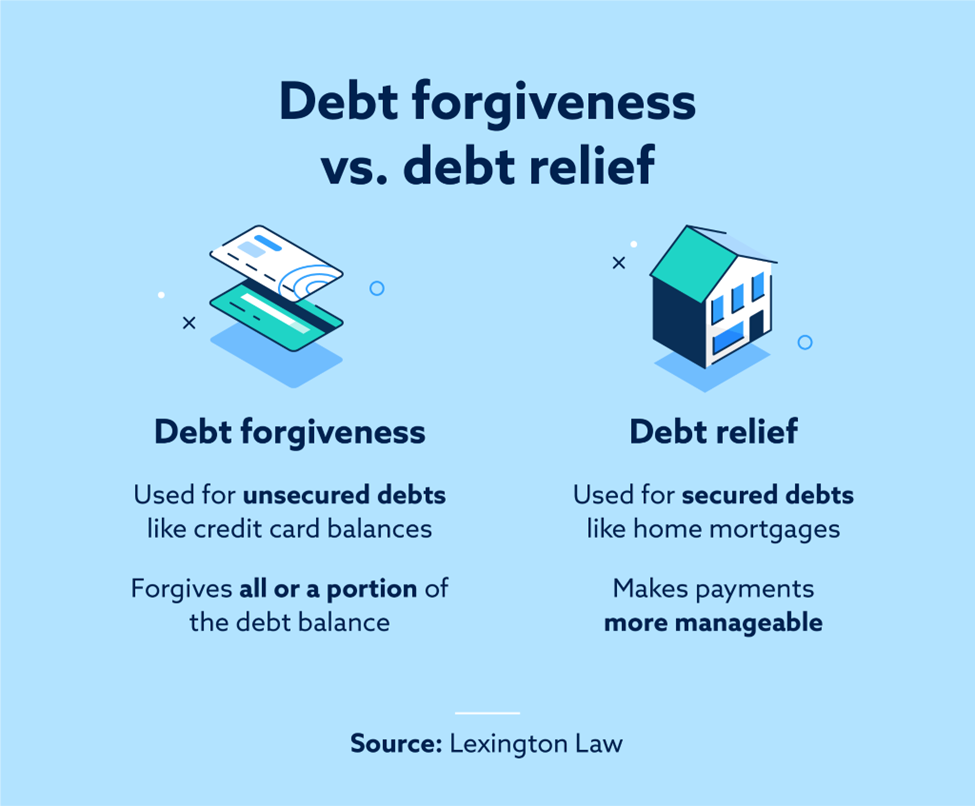
With the mercy program, the financial institution can rather choose to maintain your financial obligation on guides and redeem 50%-60% of what they are owed. Nonprofit Charge Card Debt Forgiveness and for-profit financial debt negotiation are similar in that they both supply a method to work out charge card debt by paying less than what is owed.
Bank card mercy is created to cost the customer much less, pay off the debt quicker, and have less drawbacks than its for-profit counterpart. Some crucial locations of distinction in between Credit Card Financial obligation Mercy and for-profit financial debt negotiation are: Bank card Debt Mercy programs have partnerships with creditors that have actually concurred to take part.
Once they do, the payback period starts promptly. For-profit financial obligation negotiation programs work out with each lender, usually over a 2-3-year duration, while rate of interest, costs and calls from debt collection agencies continue. This suggests a larger hit on your credit rating record and credit report, and a raising equilibrium up until negotiation is finished.
Debt Card Debt Mercy clients make 36 equal month-to-month settlements to remove their financial obligation. The settlements go to the financial institutions until the agreed-to equilibrium is eliminated. No rate of interest is billed throughout that period. For-profit financial obligation negotiation clients pay right into an escrow account over a negotiation period toward a swelling sum that will certainly be paid to lenders.
The Definitive Guide for Categories of How to Recover Financially After Job Loss You Should Know About
Throughout this moment, costs might increase, and interest builds up, so settlements may wind up not being budget friendly for customers. Meanwhile, clients stop making payments to their charge card accounts. Phone calls from debt collectors continue and creditor-reported non-payments remain to damage the client's debt record. Enrollment in a Charge Card Financial obligation Mercy stops calls and letters from financial obligation collection and recuperation companies for the accounts consisted of in the program.
For-profit debt negotiation programs don't quit collection actions until the lump-sum settlement is made to the lender. Nonprofit Bank Card Financial obligation Mercy programs will inform you in advance what the monthly cost is, topped at $75, or less, relying on what state you reside in. For-profit debt negotiation companies may not be clear regarding cost quantities, which typically are a percentage of the balance.
The 5-Second Trick For Why Denying Your Debt Problems May Cost You
For-profit financial obligation negotiation likely will harm it extra, because you won't be paying creditors during the 2-3 year negotiation/escrow period, however they have not accepted a plan or gotten any type of money, so they're still reporting nonpayment. This is on top of the credit rating struck from not paying the sum total.
Financial debt loan consolidation additionally comes with a reduced passion price than what you were paying on your credit history cards, making the regular monthly prices, as well as total costs, much less. Bank card financial obligation loan consolidation's most typical types are financial obligation administration strategies, financial obligation loan consolidation loans, or a zero-interest transfer charge card.
To obtain a financial obligation consolidation lending or a zero-interest equilibrium transfer credit report card, you need a credit rating of at the very least 680. In a lot of instances greater. If your accounts are billed off, your credit history is likely well listed below that. Credit report isn't a factor for financial debt monitoring program, yet you require an enough revenue to be able to make a month-to-month repayment that will certainly cover all of the accounts consisted of in the program.
Insolvency is the last resort for somebody who has more debt than they can pay. It can be the step you take in order to avoid bankruptcy.
The Basic Principles Of Navigating How to Recover Financially After Job Loss in Today's Economy
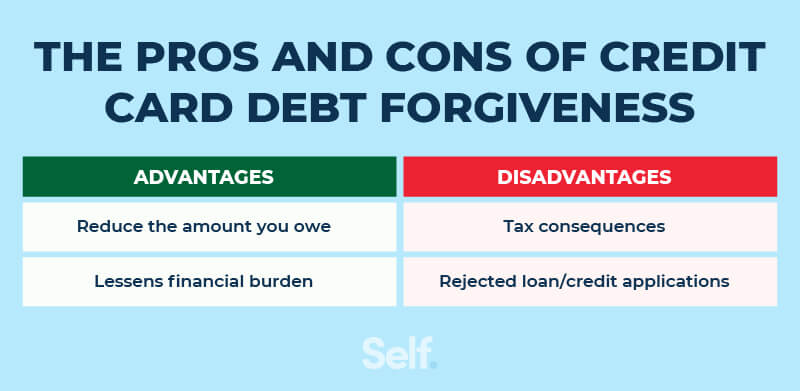
Insolvency will get rid of all eligible unsafe financial debt. Credit Score Card Financial debt Mercy will have a negative effect on your credit scores score since complete balances on accounts were not paid.
Charge Card Financial obligation Forgiveness repayments start as quickly as you're accepted into the program. Bankruptcy approval and discharge can take 6-12 months. Collection activities and lawsuits on Charge card Debt Forgiveness clients are quit when creditors consent to the plan. Declaring for insolvency sets off an automated stay on collection actions and suits, and provides security from harassment by financial institutions, yet if the court does not accept the bankruptcy, those will start up again.

Table of Contents
Latest Posts

What Does "Debt Forgiveness Destroys Your Life" Corrected Do?
Safeguarding Yourself Against Bankruptcy Counseling Predatory Practices Fundamentals Explained
Little Known Questions About ROI of Professional Debt Counseling.
More
Latest Posts
What Does "Debt Forgiveness Destroys Your Life" Corrected Do?
Safeguarding Yourself Against Bankruptcy Counseling Predatory Practices Fundamentals Explained
Little Known Questions About ROI of Professional Debt Counseling.